
The Story's Scale of Meaning
The Stars Have EyesThis flow traces the novel's central argument that significance is created through chosen attention rather than cosmic size.
increasing Bearing strength in each event
 decreasing
Bearing strength in each eventdecreasingThe Vast Universe

Perspective and Significance
Cosmic Indifference
The universe is described as vast, empty, and uncaring. Individual actions appear negligible against galaxies, time, and the totality of existence.
Narrowing the View
The narrative argues that meaning comes from focusing on what affects a life and what that life can affect in return. Perspective is not denial of scale but a method of living within it.
The Coming Example
Magh'rathlak the Observer embodies the problem. A being able to influence reality still needs to learn how to care about a single person.
Small Things Matter
Attention as Love
Trivial Objects
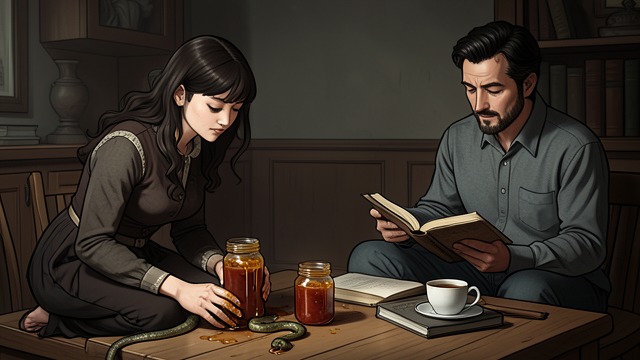
Jam, tea, games, a snake, a pod, and a badly timed joke receive careful attention. Their importance comes from the relationships attached to them rather than from intrinsic grandeur.
Joe's Method
Joe's humor and patience make ordinary life tolerable for Maggie. He does not solve cosmic mysteries, but he teaches her why small experiences matter.
Maggie's Method
Maggie responds by preserving Joe's atoms, designing his meals, restoring his body, and learning his preferences. Cosmic power becomes meaningful when spent on tiny acts of care.
A Chosen Speck
Meaning After Immensity
Time and Space Conquered
Maggie returns through a temporal path that crosses millennia. Her ascension could have made Joe insignificant, but instead it makes her devotion more deliberate.
The Ordinary Question
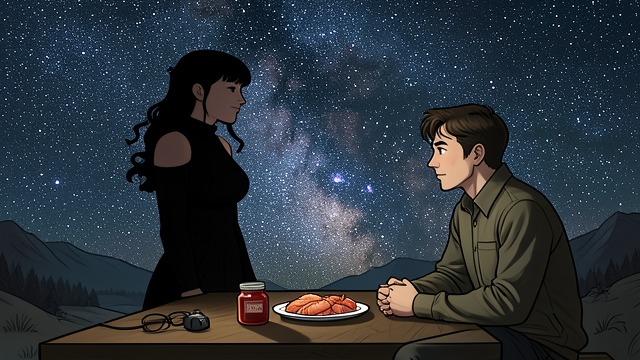
The reunited couple discusses jam, imitation crab, and Azgod'Kalar's size. Their conversation refuses to end on cosmic spectacle alone.
The Final Scale
Joe is still a tiny being in an uncaring universe, but he is no longer unimportant to the person who matters most to him. The story ends by choosing intimacy over magnitude.
opening prologue
through the middle domestic chapters
final scene
